

VIN Check Germany
Check any Germany-registered vehicle instantly. Decode the Fahrgestellnummer, verify odometer history, safety recalls, theft status, and accident records — covering vehicles with WMI codes W (WBA, WBS, WDD, WDB, WF0, WME, etc.).
EUR 8.90 full report
14-day refund
60-second delivery
Free decode preview shown automatically when you enter the VIN.

Why Check a VIN for Germany Vehicles?
Germany is Europe's largest used car market with over 7 million vehicles sold annually. German cars are popular across the EU due to strict TÜV inspections that ensure high maintenance standards.
Odometer fraud is a significant problem: an estimated 30% of used cars exported from Germany have manipulated mileage. A VIN check cross-references multiple mileage databases to detect rollback.
Germany's robust automotive industry means many vehicles carry WMI codes starting with W — BMW (WBA, WBS), Mercedes-Benz (WDB, WDD), Volkswagen (WVW), Audi (WAU), Porsche (WP0), and Opel (W0L).
German export plates (Ausfuhrkennzeichen) allow buyers to drive vehicles out of Germany, but the deregistration record should be verified via VIN to confirm the car is legally sold.
What Is “Fahrgestellnummer”?
In Germany, the Vehicle Identification Number (VIN) is known as the Fahrgestellnummer (locally searched as “Fahrgestellnummer prüfen”). It is a standardized 17-character code that uniquely identifies every motor vehicle manufactured for sale in the EU. The VIN encodes the manufacturer (WMI), vehicle attributes (VDS), and production sequence (VIS).
Vehicles manufactured in Germany carry WMI codes starting with W (WBA, WBS, WDD, WDB, WF0, WME, etc.). However, many vehicles registered in Germany are imported from other EU countries (especially Germany), so the WMI may differ from the country of registration.
Common Scams When Buying from Germany
Odometer rollback (Tachomanipulation): The most prevalent scam in the German used car market. Sellers reduce the displayed mileage by 50,000–150,000 km to inflate the selling price. Carlytics checks multiple mileage databases to detect inconsistencies.
Flood-damaged vehicles from insurance write-offs being repaired and sold as clean titles. Always check the accident history section of a VIN report for total loss or salvage events.
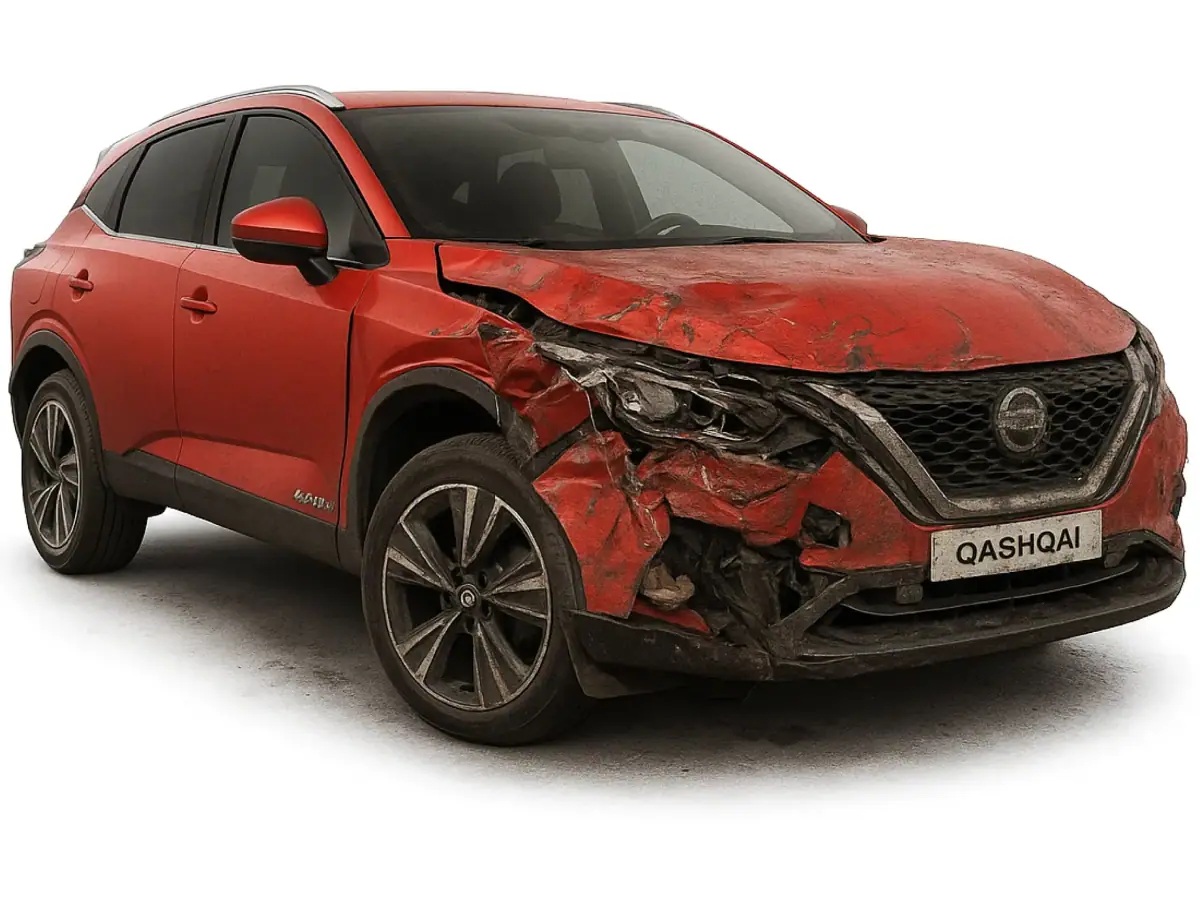
Hidden accident history: Vehicles involved in serious collisions are professionally repaired and sold without disclosure. A VIN report reveals insurance claims, structural damage records, and airbag deployment history.
What Data Sources We Check for Germany
When you run a VIN check for a Germany-registered vehicle, Carlytics queries multiple authoritative databases:
How a Germany VIN Is Structured
Every VIN — whether the vehicle was built in Germany or imported — follows the ISO 3779 standard:
| Positions | Section | What It Tells You |
|---|---|---|
| 1-3 | WMI | World Manufacturer Identifier — identifies the maker and country of origin. Germany-made vehicles use W (WBA, WBS, WDD, WDB, WF0, WME, etc.). |
| 4-8 | VDS | Vehicle Descriptor Section — encodes model, body style, engine type, and restraint systems. |
| 9 | Check digit | Mathematical check digit to detect invalid or fraudulent VINs. |
| 10 | Model year | Encoded production year (e.g., R = 2024, S = 2025). |
| 11 | Plant code | Identifies the assembly plant where the vehicle was built. |
| 12-17 | VIS | Vehicle Indicator Section — unique serial number for the specific vehicle. |
VIN Check Germany — FAQ
Common questions about checking vehicle history in Germany
Where do I find the VIN on a German car?
Is it legal to check a VIN for a German car I want to buy?
What does the free VIN check include for German vehicles?
Why Germany Is the Source of Half of Europe's Used-Car Imports
Germany sells more used cars across EU borders than any other country in Europe. The mechanism is structural: the German leasing market returns 1.5–2 million off-lease vehicles every year, large corporate fleets cycle their cars at 3–4 years, and Germany's CO2-based vehicle taxation gradually prices older cars out of the domestic market. The result is a steady wholesale supply that flows east and south — to Poland (around 422,000 per year), Romania, Bulgaria, Hungary, Croatia, and the Baltic states.
The same supply chain creates the fraud opportunity. A car that has been driven 200,000 km in a German company fleet is mechanically fine for another 150,000 km — but it is also a strong rollback target, because the gap between the last German registration record and the first foreign registration record is invisible to any single national database. A pan-European VIN check is the only way to surface both endpoints in one document.
Where to Find the Fahrgestellnummer on a German Car
On every German-registered vehicle, the VIN — Fahrgestellnummer, abbreviated FIN — is printed on three documents and stamped on three physical locations.
On the documents
- Zulassungsbescheinigung Teil I (the “Fahrzeugschein” — the small registration document): field E.
- Zulassungsbescheinigung Teil II (the “Fahrzeugbrief” — the larger ownership document): same field E.
- The Hauptuntersuchung (HU/TÜV) inspection certificate.
On the car itself
- Stamped into the body — near the windshield base on the driver side, visible through a small window in the dashboard.
- On a manufacturer plate inside the engine bay (most Volkswagen-Group cars use the slam panel under the bonnet).
- On a plate behind the rear seat or in the boot floor on many Mercedes models.
Warning sign: A seller who can produce Teil II but not Teil I — or vice versa — may not legally own the vehicle. Outstanding finance is the typical reason the bank still holds Teil II. Never wire a deposit before seeing both documents together.
The TÜV Cycle and the 24-Month Rollback Window
Every German car undergoes a Hauptuntersuchung (HU, commonly called the TÜV test) after the third year, then every 24 months. The HU records the odometer reading at each visit. Between two HU tests, mileage data exists only on paper protocols held by the inspecting station and the owner — there is no public real-time national mileage register.
This 24-month structural gap is what exporters exploit. A car with HU readings of 80,000 km (year −3) and 130,000 km (year −1) is sold to a wholesaler showing 140,000 km, then arrives in Poland or Romania showing 75,000 km on the dashboard. The 65,000 km is “lost” in the trans-border gap.
| Stage | What happens | Fraud window opens? |
|---|---|---|
| Last German HU | Mileage recorded on TÜV protocol | No — paper record exists |
| Owner sells to wholesaler | Dashboard mileage taken on faith | Open — first opportunity |
| Deregistration (Abmeldung) | Date recorded, mileage NOT recorded | Open — no national mileage lock |
| Border crossing on export plate | Customs records vehicle exit, not mileage | Widest window — 1–6 weeks typical |
| First foreign registration | Local registry records new mileage | Closed — but the gap is now invisible |
Carlytics combines the German-side data points (the last HU mileage, the deregistration date, and the original factory production data) with the foreign-side first-registration records. The gap becomes visible. That cross-border reconciliation is exactly what no single-country lookup can do.
The Six German-Market Disclosure Traps to Watch For
German consumer law (BGB §433) requires sellers to disclose material defects they know about. In practice, six framings are routinely used to skirt the law. Recognising them is the first defence.
Sold “for hobbyists, no warranty.” This phrase in the contract excludes the implied §433 warranty entirely. Walk away unless you have a mechanic confirming the actual condition.
“Prior damage repaired” — does not disclose extent, repair quality, or insurance category. Demand the original claim documentation.
“Accident-free to the seller's knowledge.” Limits liability to what the seller actually knew. A VIN check exposes accidents the seller may have inherited unknowingly from a previous owner.
“Bought as seen.” Used by private sellers to disclaim warranty — not valid against deliberate concealment under §444 BGB, but you need evidence (a VIN report is that evidence).
Used to disguise a German-origin car that was temporarily registered abroad to reset its visible history. A pan-European check reconstructs the full timeline.
Implies a 1-year-old company car. Sometimes used loosely for 3-year leasing returns with 90,000 km. The VIN-encoded production date settles the question.
Gotowy, aby sprawdzić pojazd?
Wpisz numer VIN poniżej, aby uzyskać darmowy raport.
If the Seller Won't Show You the Fahrzeugbrief
The Zulassungsbescheinigung Teil II is the title document. Without it, the car cannot be re-registered in Germany or abroad. A seller who refuses to produce Teil II is in one of three positions:
- Holding it back to extract a deposit — never wire money before seeing Teil II in person.
- Has financed the vehicle — the bank holds the document until the loan is settled.
- Has lost or sold Teil II already — selling a vehicle they do not legally own.
Run a VIN check before any deposit. If the report flags outstanding finance, you have grounds to walk away. If the report shows the car was previously deregistered abroad (a reimport), demand both the German Teil II and the original foreign document — without the chain, the car is not legally yours after handover.
Cross-Border Partner Pages
German used cars are routinely re-registered in Poland, Romania, the Czech Republic, and other markets. If you are buying a German-origin car already registered in another country, these pages cover the local angle:
Trusted in 30+ countries worldwide
Carlytics aggregates vehicle data from 35+ European countries, pulling from national registries like Finnish Traficom (5M vehicles), Dutch RDW, Czech ISTP, and Danish DMR. Combined with NHTSA, EU Safety Gate recalls, and 348,000+ real listings, the database covers 900M+ vehicles.
Access data from national registries,
insurance databases, law enforcement and more.
Extended German-Market FAQ
Detailed questions about checking the history of a German-registered vehicle, the TÜV cycle, and the export/reimport process.
Where on the Fahrzeugschein is the FIN printed?
Is checking a German VIN legal under GDPR?
How can I detect odometer manipulation (Tachomanipulation) on a German car?
What is the difference between Unfallschaden and Vorschaden?
Can I check the last TÜV/HU date from the VIN?
What is a Reimport and why is it a warning sign?
How much does a Carlytics VIN check cost?
What data does the free VIN check include?
Can I also check motorcycles with Carlytics?
What should I do if the odometer reading between two TÜV inspections does not match?
Get the Full German Vehicle History — EUR 8.90
Cross-border mileage history across the German export gap, accident records from European insurance databases, theft register lookup, safety recalls, and market value. Delivered in under 60 seconds. 14-day no-questions refund on every report.
Results in under 60 seconds